The Eco Heroes experience
A story. A mission. A child who changes something.
Seventeen illustrated books, a short mission video for every Global Goal, an adventure game, trivia and 51 lesson plans. In 13 languages, lesson plans from age 6 and the game from age 9.
The Eco Heroes Experience film · 2 min 50 · captions in 13 languages (CC button)
Made with AI from Eco Heroes' own stories, characters and illustrations. The books and their illustrations are by human authors and artists. People shown in this video are AI-generated portrayals, not real footage.
- 17picture books
- 13book languages
- 13platform languages
- 51lesson plans
- 37education systems mapped
- 6+ages · game from 9
Read
Seventeen stories, one for each goal
Every Global Goal has its own picture book. Goals 1 to 10 were written by Ricardo Alcántara, winner of the Premio Lazarillo; goals 11 to 17 by David Fernández Sifres, winner of the Premio Barco de Vapor. Eleven illustrators gave each story its own world. Eco Heroes holds the exclusive worldwide licence to publish them for education.
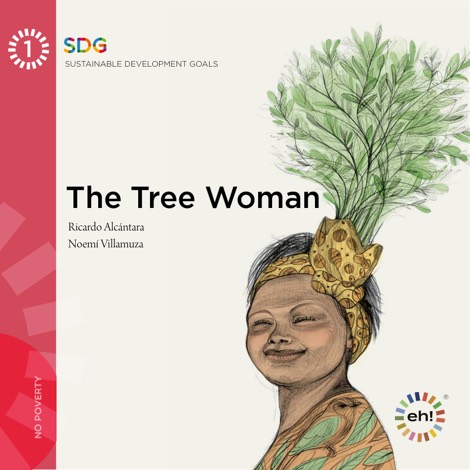
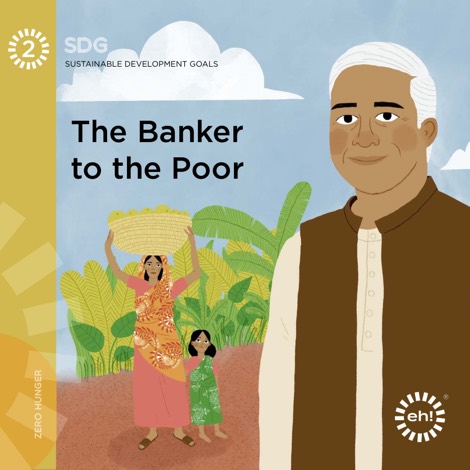
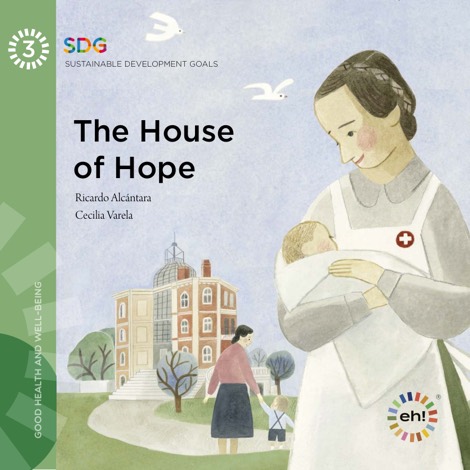
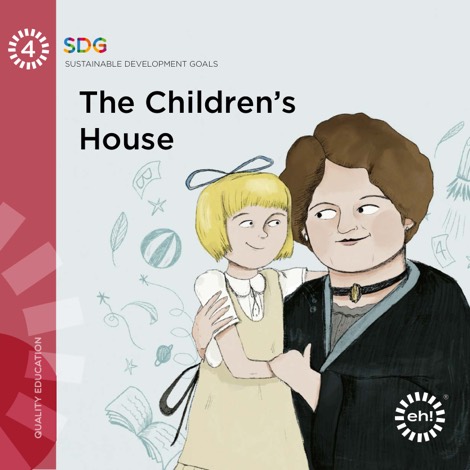
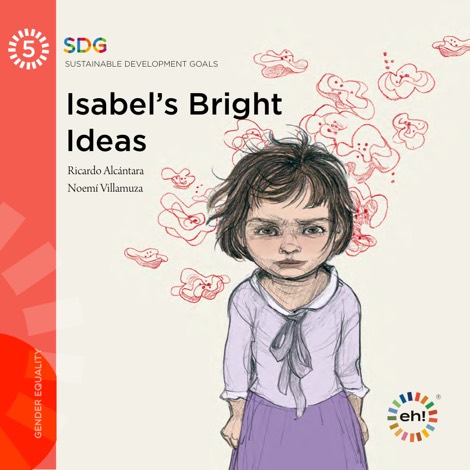
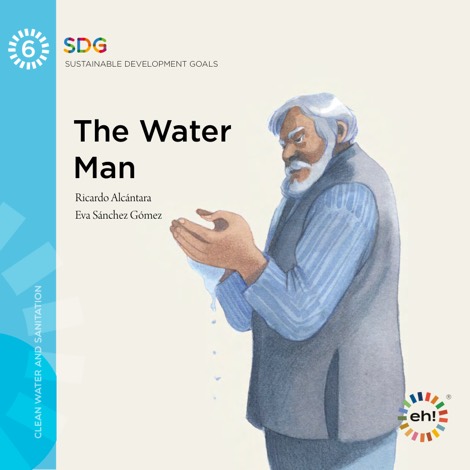
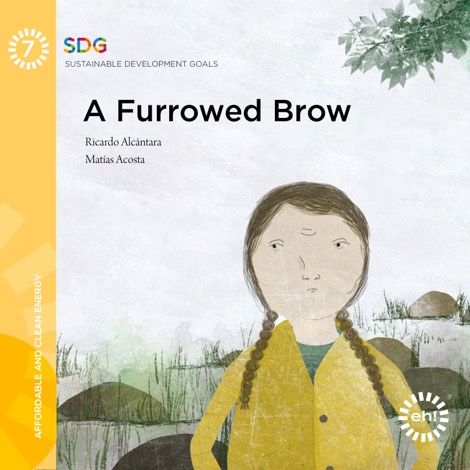
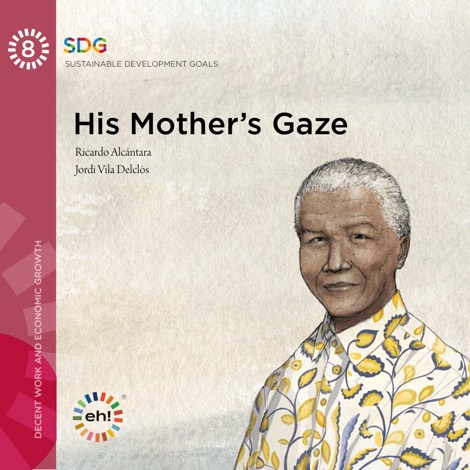
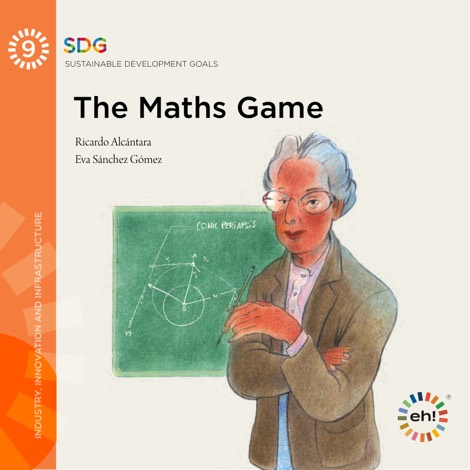
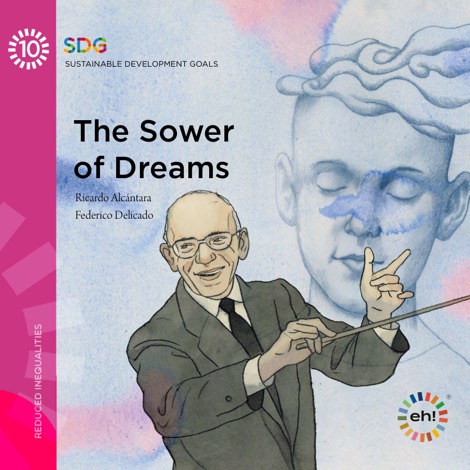
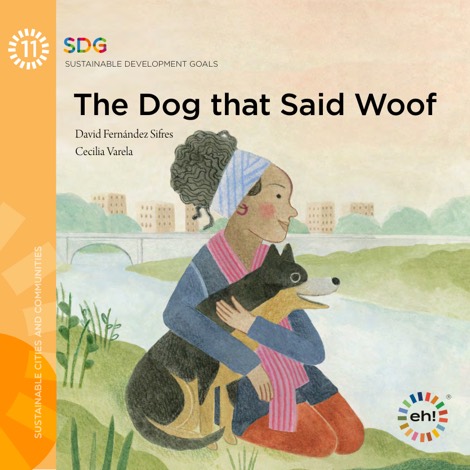
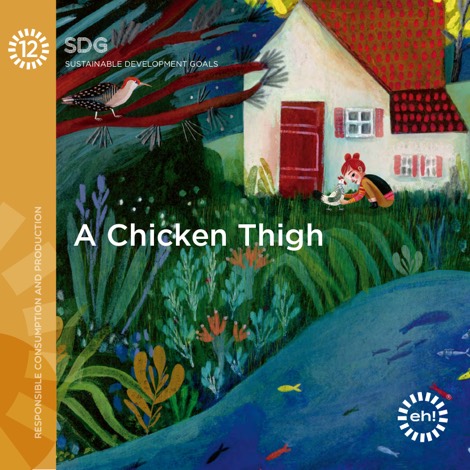
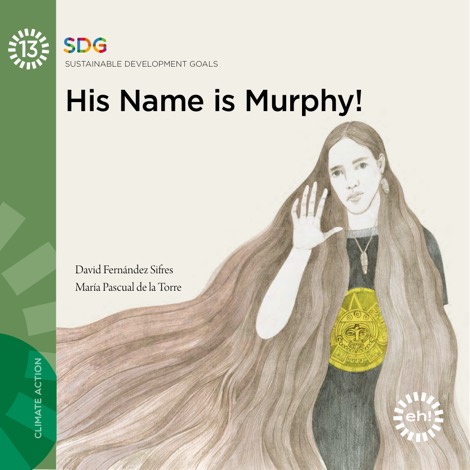
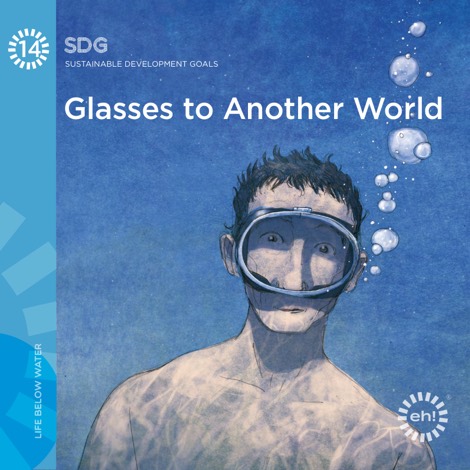
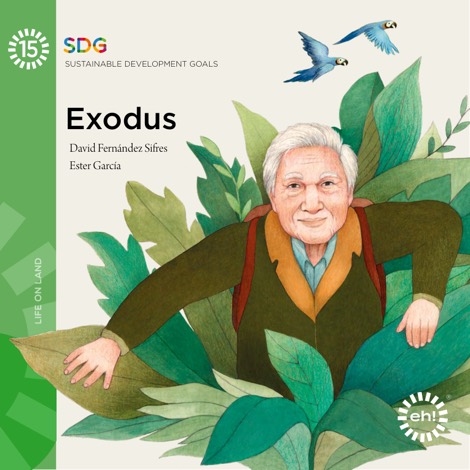
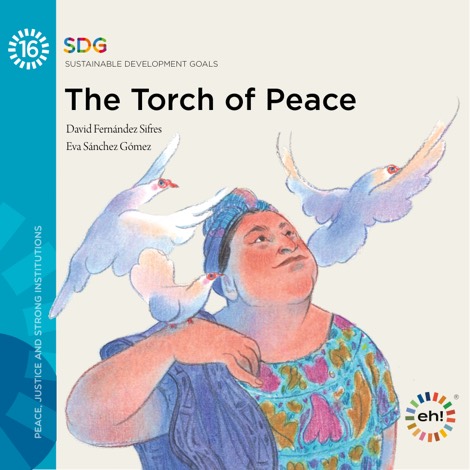
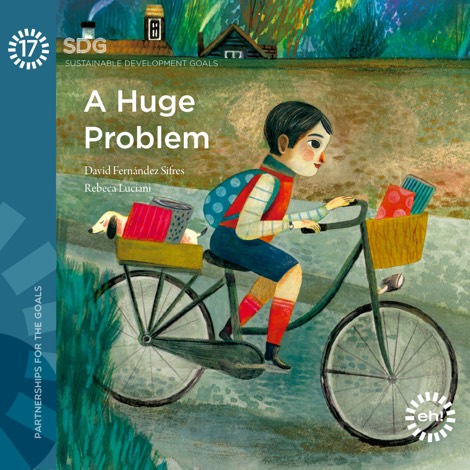
The books are published in thirteen languages: English, Spanish, French, German, Italian, Portuguese, Catalan, Danish, Dutch, Japanese, Korean, Chinese and Arabic. They unlock with a family or school plan.
Made with AI from Eco Heroes' own stories, characters and illustrations. The books and their illustrations are by human authors and artists. People shown in this video are AI-generated portrayals, not real footage.
Transcript
Everything said in the video, in order, with the words and figures shown on screen.
Version for ages 9–12
- April: No one left behind. Beat poverty together. An Eco Heroes mission.
- On screen: An Eco Heroes mission · Goal 1 · ages 9–12
- On screen: See something real
- April: Everyone must choose between needs and wants. Why are some families poor when they work so hard?
- On screen: A real question is where every mission starts.
- On screen: Investigate the system
- Karim: No Poverty is a system, not a headline. 837 million people live in extreme poverty on under $3.00 a day.
- On screen: 837 million people live in extreme poverty on under $3.00 a day. (Source: World Bank, 2026)
- Karim: of people in extreme poverty are children.
- On screen: 1 / 2 of people in extreme poverty are children. (Source: UNICEF & World Bank, 2023)
- On screen: 1.1B people are 'multidimensionally poor' — lacking health, schooling or basics. (Source: UNDP Multidimensional Poverty Index, 2023)
- On screen: Step 4 · Meet someone who understands it
- Karim: Ask the people who know: a social worker, a food-bank volunteer, your town hall.
- April: Your mission — Needs vs Wants. Money is limited — so choices matter. Learn to tell the two apart. Do: List 5 things your family truly needs and 5 they just want.
- On screen: Prove: Sort them and share with someone at home.
- On screen: Reflect: Was anything hard to decide?
- April: Bring it to school.
- On screen: Bring it to school: Show your class what you found. One finding from each of you becomes a map of your town.
- April: Show your class what you found. Discuss it at home.
- On screen: Discuss it at home: Tell your family what you did and ask them one question about it. Information fades — questions travel.
- April: Tell your family what you did and ask them one question about it. Take action locally.
- On screen: Take action locally: Pick the one action from your mission you can do this week — and tell one person why.
- Karim: A true story — The Banker to the Poor. Poverty is not created by the poor — it's created by the systems around them.
- On screen: Small hands. Real problem. Real change.
- Karim: Muhammad Yunus. 17 goals, 13 languages, one hero: your child. eco-heroes.org
- On screen: eco-heroes.org/game
Version for ages 13–17
- April: Poverty isn't bad luck.
- On screen: An Eco Heroes mission · Goal 1 · ages 13–17
- On screen: Notice something real
- April: It's a system. In 2024 about 1 in 10 people lived on less than 3 dollars a day. Why do people who work full-time still end up poor?
- On screen: Hard questions are where real missions start.
- On screen: Map the system
- Karim: Poverty is a system: wages, prices, housing and who gets a chance. 837 million people live in extreme poverty, on less than 3 dollars a day.
- On screen: 837M people live in extreme poverty (under $3 a day). (Source: World Bank, 2026)
- On screen: 1.2B people lack health care, schooling or basic services. (Source: UNDP & OPHI, 2026)
- On screen: 1 in 2 people in extreme poverty is a child. (Source: World Bank, 2025)
- On screen: Step 4 · Talk to someone who knows
- Karim: Interview someone who sees it up close: a food-bank volunteer, a social worker, a local councillor.
- April: Your mission — The Real Cost of Living. Work out what a month really costs a family in your town.
- On screen: Do: Price rent, food, transport and energy for a family of four, using real local prices.
- On screen: Prove: Compare the total with the local minimum wage: what's the gap?
- On screen: Reflect: Which cost could a policy change most — and who decides?
- April: Take it to school.
- On screen: Take it home: Ask your family which cost surprised them most.
- On screen: Act where you live: Volunteer at a food bank or send your findings to a local councillor.
- On screen: Real data. Real questions. Real change.
- April: Present your budget gap to your class and compare it with another country. Then take it home, and act where you live.
- Karim: A true story. Poverty is not created by the poor — it's created by the systems around them. Muhammad Yunus. 17 goals, 13 languages, your move. eco-heroes.org
Goal 1 is free to watch. The other sixteen missions are part of the family and school plans.
Watch
A short mission video for every goal
Each goal has a short mission video in two versions, for ages 9–12 and 13–17, in all 13 languages and always with captions. It starts with something real, asks a child's question, shows the numbers and ends with a mission to do this week.
Play
The game, the trivia and the word games
Learning sticks when a child plays with it. Three ways in, all in the same thirteen languages.
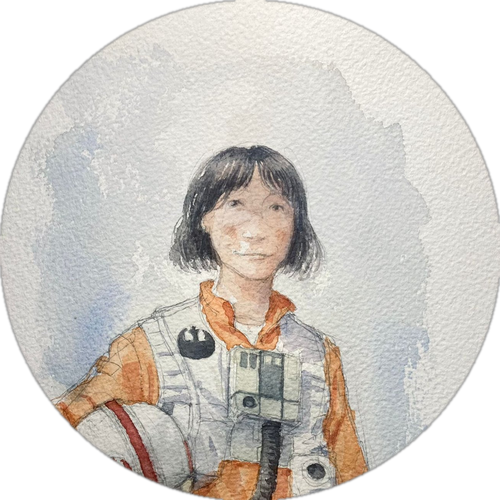
SDG Adventure Game
All seventeen goals, playable: read the story, answer the quiz, take on the real-world mission. Children earn XP, choose avatars and unlock diplomas. The Goal 1 chapter is free.
Play Goal 1 free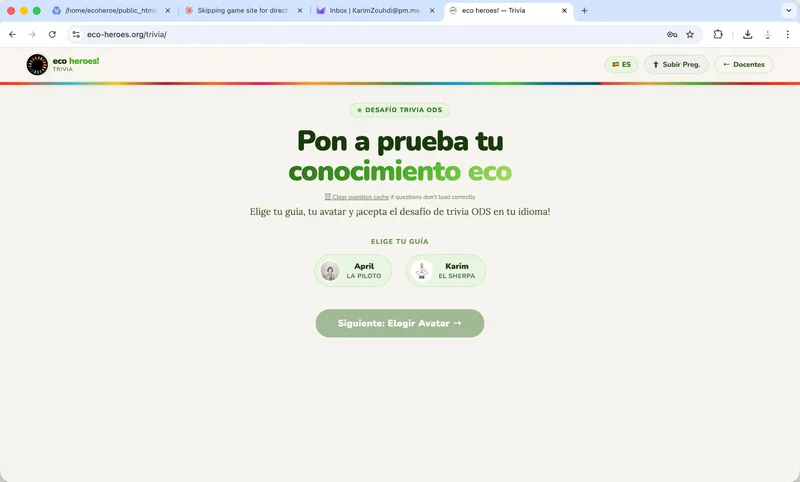
Trivia Challenge
Spin the wheel, pick a goal and a level. 500+ questions per language (6,900+ in total) on three difficulty levels, with live scoring.
Play the triviaDaily word games
SDG Wordle, Connections, Mini Crossword, Spelling Bee and a Quick Quiz: a new puzzle every day, with levels for ages 6–10, 11–13 and 14–17.
Today's word games
Do
Every goal ends off the screen
A mission is something a child can actually do: at home, in the street, at the shops. Each one has three parts, so the child does it, shows it and thinks about it. This is the Goal 1 mission, exactly as it appears in the video and the game.

Your mission · Needs vs Wants
Money is limited — so choices matter. Learn to tell the two apart.
- DoList 5 things your family truly needs and 5 they just want.
- ProveSort them and share with someone at home.
- ReflectWas anything hard to decide?
Teach
51 lesson plans, mapped to 37 education systems
One ready-to-teach plan for every goal in three age bands, with objectives, timings, discussion prompts and exit tickets. The three SDG 1 plans (one per age band) are free to print; all 51 are included with a licence.
- Ages 6–8
- Ages 9–12
- Ages 13–17
- Curriculum maps for 37 education systems, from Spain, Catalonia and Andorra to Switzerland, Belgium, Australia, Japan and Singapore.
- Train the Trainers: five modules on teaching the Global Goals, mapped to GreenComp and the UNESCO ESD competences, with a certificate.
- Class codes unlock all seventeen goals and both handbooks; progress is tracked in Moodle.
- Two student handbooks: Explorer (ages 9–12) and Changemaker (ages 13–17), plus the teacher handbook.
Languages
Thirteen languages, right to left too
The site, the videos and their captions, the game, the trivia and the lesson plans run in thirteen languages, including Arabic with full right-to-left layout. The picture books are published in all of them.
The people
Made by people who write for children
Ricardo Alcántara (Premio Lazarillo, Spain's oldest children's literature award (since 1958)) and David Fernández Sifres (Premio Barco de Vapor) wrote the stories. Eleven illustrators drew them, among them Premio Junceda winner Noemí Villamuza, Jordi Vila Delclòs, Julie Dufour, Cecilia Varela, Eva Sánchez Gómez, Rebeca Luciani, Federico Delicado, Ester García, Eliana Gutiérrez, Matías Acosta and María Pascual de la Torre.
- Premio Lazarillo
- Premio Barco de Vapor
- Premio Junceda
- UNESCO ESD
- GreenComp
- ICC España
Aligned with the UN 2030 Agenda, UNESCO Education for Sustainable Development and the EU GreenComp framework. Strategic alliance with ICC España since March 2025.
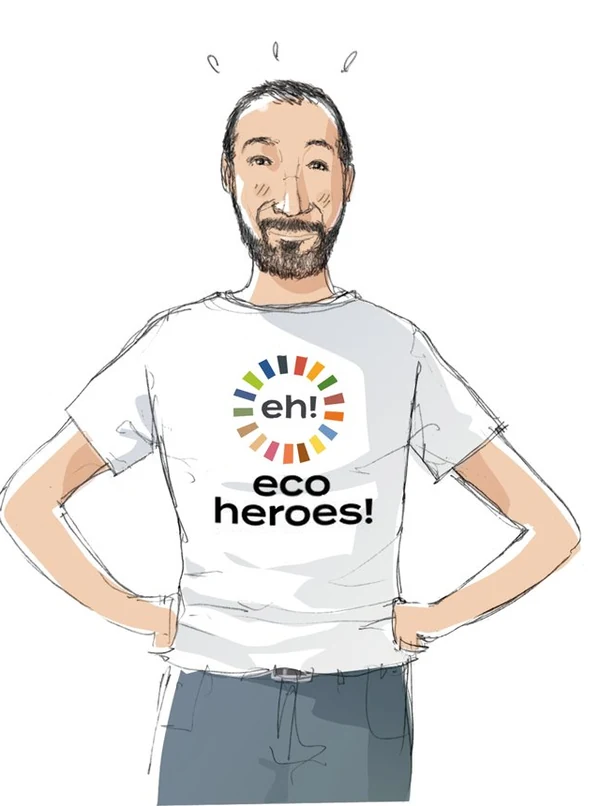
Three years ago my daughter Abril asked me a question I couldn't answer well. Eco Heroes is what I've been building ever since: to give every child the tools, stories and games to understand the world they're inheriting, and the confidence to change it.
Casa Abril
The social pillar of Eco Heroes, still in development: a place in nature we want to build, where children, elders and families who need a little more will be welcome, free of charge.
Visit Casa Abril
Ambassadors
Teachers, parents, students and local leaders who carry the Global Goals into their own communities. Free to join, no exam, no fixed commitment.
Become an Ambassador
Which part is for which age
Eco Heroes has three age groups: 6 to 8, 9 to 12 and 13 to 17. This is what each group gets.
| Age | Read | Watch | Play | Act and teach |
|---|---|---|---|---|
| 6 to 8 | The 17 picture books (read together), reading guide questions for ages 6 to 8 | The mission films start at 9. Until then, the 6 to 8 mission with a grown-up | Daily word games and the dinner-table questions | Lesson plans for 6 to 8, the 6 to 8 mission, the guide activities |
| 9 to 12 | The picture books and guide questions for 9 to 11 | Mission videos, Explorer version (9 to 12) | The adventure game (Explorer), trivia, live class quiz | Lesson plans for 9 to 12 (at 9 and 10, the 6 to 8 plans also fit), real-world missions, handbook |
| 13 to 17 | The picture books as a case study (they are written for 6 to 12; guide questions go up to 14) | Mission videos, Changemaker version (13 to 17) | The adventure game (Changemaker), trivia, live class quiz | Lesson plans for 13 to 17 (at 13, the 9 to 12 plans also fit), real-world missions, handbook |
Teachers and parents also use Eco Heroes with children outside these ranges.
Plans
Start with one goal, free
Goal 1 is open to everyone. The rest unlocks with a plan.
Free
Goal 1: its chapter of the adventure game, the trivia and the mission video. No account needed.
Try SDG 1 freeFamilies
€79 a year for one child + VAT€95.59 with 21% Spanish VAT. The VAT and the total that apply to you are shown before you pay. All seventeen books, the game, the trivia, both handbooks and every mission video, in 13 languages.
The family planSchools, hotels and companies
By quote. Class codes, both handbooks, Moodle tracking and teacher training for schools, with a free class pilot first; codes for employees' families and for hotel kids' clubs. What each plan includes today is listed on its page.
Request a quote