
SDG 1 · No Poverty
One in ten people lives on less than $3 a day.
Eco Heroes turns that fact into a story a 9-year-old can hold onto: The Tree Woman. The SDG 1 guide and trivia are free, no account needed.
The target, in plain language
What the UN actually promised
By 2030, eradicate extreme poverty for all people everywhere.
Target 1.2 goes further: halve poverty in all its forms, not just income, for men, women and children of all ages, measured by each country's own definition.
Why it matters
The number behind the story
Source: The Sustainable Development Goals Report 2026, UN DESA. Figures as published in July 2026. · World Bank, 2026
The story
The Tree Woman
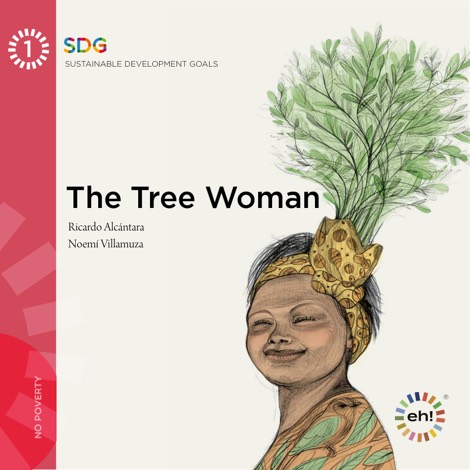
The Tree Woman
Book 1 of 17 in the Eco Heroes SDG Library, one illustrated story for each UN Sustainable Development Goal. Included with a family or school plan. Published in English, Spanish, French, German, Italian, Portuguese, Catalan, Danish, Dutch, Japanese, Korean and Chinese.
Bring it into the room
Talk about it, try it
One question to ask after reading
“What's one thing you have that you didn't earn, and one thing someone worked hard for that you take for granted?” There's no wrong answer. The point is noticing the difference.
Map who keeps your street running
Walk or think through your neighbourhood and list every job that has to happen for it to work: bin collection, the corner shop, the bus driver. Talk about which of those jobs pay enough to live on.
Watch
The short mission video
April and Karim walk through this goal in a short video, with subtitles in your language.
Transcript
Everything said in the video, in order, with the words and figures shown on screen.
Version for ages 9–12
- April: No one left behind. Beat poverty together. An Eco Heroes mission.
- On screen: An Eco Heroes mission · Goal 1 · ages 9–12
- On screen: See something real
- April: Everyone must choose between needs and wants. Why are some families poor when they work so hard?
- On screen: A real question is where every mission starts.
- On screen: Investigate the system
- Karim: No Poverty is a system, not a headline. 837 million people live in extreme poverty on under $3.00 a day.
- On screen: 837 million people live in extreme poverty on under $3.00 a day. (Source: World Bank, 2026)
- Karim: of people in extreme poverty are children.
- On screen: 1 / 2 of people in extreme poverty are children. (Source: UNICEF & World Bank, 2023)
- On screen: 1.1B people are 'multidimensionally poor' — lacking health, schooling or basics. (Source: UNDP Multidimensional Poverty Index, 2023)
- On screen: Step 4 · Meet someone who understands it
- Karim: Ask the people who know: a social worker, a food-bank volunteer, your town hall.
- April: Your mission — Needs vs Wants. Money is limited — so choices matter. Learn to tell the two apart. Do: List 5 things your family truly needs and 5 they just want.
- On screen: Prove: Sort them and share with someone at home.
- On screen: Reflect: Was anything hard to decide?
- April: Bring it to school.
- On screen: Bring it to school: Show your class what you found. One finding from each of you becomes a map of your town.
- April: Show your class what you found. Discuss it at home.
- On screen: Discuss it at home: Tell your family what you did and ask them one question about it. Information fades — questions travel.
- April: Tell your family what you did and ask them one question about it. Take action locally.
- On screen: Take action locally: Pick the one action from your mission you can do this week — and tell one person why.
- Karim: A true story — The Banker of the Poor. Poverty is not created by the poor — it's created by the systems around them.
- On screen: Small hands. Real problem. Real change.
- Karim: Muhammad Yunus. 17 goals, 13 languages, one hero: your child. eco-heroes.org
- On screen: eco-heroes.org/game
Version for ages 13–17
- April: Poverty isn't bad luck.
- On screen: An Eco Heroes mission · Goal 1 · ages 13–17
- On screen: Notice something real
- April: It's a system. In 2024 about 1 in 10 people lived on less than 3 dollars a day. Why do people who work full-time still end up poor?
- On screen: Hard questions are where real missions start.
- On screen: Map the system
- Karim: Poverty is a system: wages, prices, housing and who gets a chance. 837 million people live in extreme poverty, on less than 3 dollars a day.
- On screen: 837M people live in extreme poverty (under $3 a day). (Source: World Bank, 2026)
- On screen: 1.2B people lack health care, schooling or basic services. (Source: UNDP & OPHI, 2026)
- On screen: 1 in 2 people in extreme poverty is a child. (Source: World Bank, 2025)
- On screen: Step 4 · Talk to someone who knows
- Karim: Interview someone who sees it up close: a food-bank volunteer, a social worker, a local councillor.
- April: Your mission — The Real Cost of Living. Work out what a month really costs a family in your town.
- On screen: Do: Price rent, food, transport and energy for a family of four, using real local prices.
- On screen: Prove: Compare the total with the local minimum wage: what's the gap?
- On screen: Reflect: Which cost could a policy change most — and who decides?
- April: Take it to school.
- On screen: Take it home: Ask your family which cost surprised them most.
- On screen: Act where you live: Volunteer at a food bank or send your findings to a local councillor.
- On screen: Real data. Real questions. Real change.
- April: Present your budget gap to your class and compare it with another country. Then take it home, and act where you live.
- Karim: A true story. Poverty is not created by the poor — it's created by the systems around them. Muhammad Yunus. 17 goals, 13 languages, your move. eco-heroes.org
Breaking the cycle of poverty
In Bangladesh, the Grameen Bank provided micro-loans to women with no collateral. Over 40 years, it lifted millions out of poverty by trusting communities to manage their own finances.
Quick check
Test yourself
What does SDG 1 aim to end?Show the answer
- War
- Poverty
- Pollution
- Hunger
Answer: Poverty — SDG 1 aims to end poverty in all its forms, everywhere.
Which action helps reduce poverty?Show the answer
- Building walls
- Sharing skills and resources
- Ignoring neighbours
- Wasting food
Answer: Sharing skills and resources — Sharing skills and resources helps communities lift each other out of poverty.
Extreme poverty means living on less than $3.00 a day.Show the answer
Answer: True — The World Bank's international poverty line has been $3.00 a day (2021 prices) since June 2025; it was $2.15 before.
Go further
Sixteen more goals, sixteen more stories
Every SDG gets its own illustrated book, its own facts and its own activities. SDG 1 is free to try: its game chapter, trivia and video. The books and the other goals unlock with a family, school or hotel plan.
Explore the full library →