
SDG 3 · Good Health and Well-being
14.3 million children have never had a single vaccine.
Eco Heroes turns that fact into a story a 9-year-old can hold onto: The House of Hope, book 3 of 17 in the SDG Library.
The target, in plain language
What the UN actually promised
By 2030, end preventable deaths of newborns and children under 5 years of age, with all countries aiming to reduce neonatal mortality to at least as low as 12 per 1,000 live births and under-5 mortality to at least as low as 25 per 1,000 live births.
Target 3.8 aims for universal health coverage: quality care, and safe, effective, affordable medicines and vaccines for everyone.
Why it matters
The number behind the story
Source: The Sustainable Development Goals Report 2026, UN DESA. Figures as published in July 2026.
The story
The House of Hope
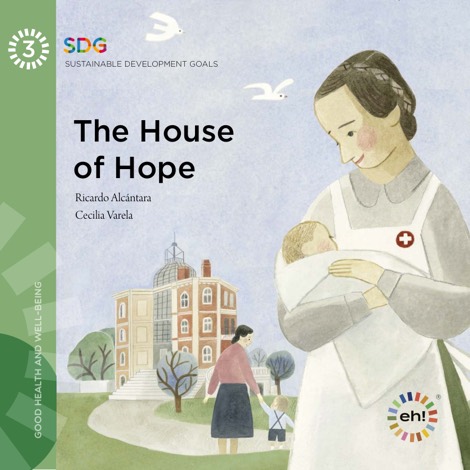
The House of Hope
Book 3 of 17 in the Eco Heroes SDG Library, one illustrated story for each UN Sustainable Development Goal. Included with any Eco Heroes plan (families from €79 a year + VAT: €95.59 with 21% Spanish VAT; the VAT and the total that apply to you are shown before you pay); SDG 1 is free to try. Published in English, Spanish, French, German, Italian, Portuguese, Catalan, Danish, Dutch, Japanese, Korean and Chinese.
Bring it into the room
Talk about it, try it
One question to ask after reading
“Who looks after your health without you even noticing? And who looks after theirs?”
Draw a health map
Mark the nearest pharmacy, clinic, hospital, drinking-water tap and safe place to play around your home or school. Then talk about how far a child without those nearby would have to travel.
Watch
The short mission video
April and Karim walk through this goal in a short video, with subtitles in your language.
Transcript
Everything said in the video, in order, with the words and figures shown on screen.
Version for ages 9–12
- April: Healthy bodies. Healthy minds. An Eco Heroes mission.
- On screen: An Eco Heroes mission · Goal 3 · ages 9–12
- On screen: See something real
- April: Small daily habits build a strong body and mind. What keeps a whole town healthy?
- On screen: A real question is where every mission starts.
- On screen: Investigate the system
- Karim: Good Health is a system, not a headline.
- On screen: 4.9M children under 5 still die each year, mostly from preventable causes. (Source: UN IGME, 2022)
- Karim: 4.9 million children under 5 still die each year, mostly from preventable causes. ~800 women die every day from mostly preventable causes in pregnancy or birth.
- On screen: ~800 women die every day from mostly preventable causes in pregnancy or birth. (Source: WHO, 2023)
- On screen: 1 / 2 of the world's people lack essential health services. (Source: WHO & World Bank, 2023)
- On screen: Step 4 · Meet someone who understands it
- Karim: Ask the people who know: a nurse, a pharmacist, a PE teacher.
- April: Your mission — Wellness Routine. Design a healthy day and actually live it. Do: Plan a day with 30 min moving, a fruit or veg, and good sleep.
- On screen: Prove: Follow it for 3 days and tick each part off.
- On screen: Reflect: Which habit was hardest to keep?
- April: Bring it to school.
- On screen: Bring it to school: Show your class what you found. One finding from each of you becomes a map of your town.
- April: Show your class what you found. Discuss it at home.
- On screen: Discuss it at home: Tell your family what you did and ask them one question about it. Information fades — questions travel.
- April: Tell your family what you did and ask them one question about it. Take action locally.
- On screen: Take action locally: Pick the one action from your mission you can do this week — and tell one person why.
- Karim: A true story — The Lady with the Lamp. Whatever else nursing is, it is the finest of the fine arts.
- On screen: Small hands. Real problem. Real change.
- Karim: Florence Nightingale. 17 goals, 13 languages, one hero: your child. eco-heroes.org
- On screen: eco-heroes.org/game
Version for ages 13–17
- April: Health is not just about hospitals.
- On screen: An Eco Heroes mission · Goal 3 · ages 13–17
- On screen: Notice something real
- April: More than half the world cannot get the essential health care they need. Why does where you are born decide how long you live?
- On screen: Hard questions are where real missions start.
- On screen: Map the system
- Karim: Health is a system: clean water, food, money, doctors and trust. 4.6 billion people, more than half the world, still lack essential health services.
- On screen: 4.6B people lack essential health services. (Source: WHO & World Bank, 2025)
- On screen: 4.9M children died before age five in 2024. (Source: UN IGME, 2026)
- On screen: ~700 women die every day from pregnancy or birth. (Source: WHO, 2025)
- On screen: Step 4 · Talk to someone who knows
- Karim: Interview someone who knows: a nurse, a pharmacist, a public-health officer.
- April: Your mission — Health Map. Map what makes your neighbourhood healthy — or not.
- On screen: Do: Survey 20 people about sleep, exercise and access to a doctor.
- On screen: Prove: Chart the results and find the biggest gap.
- On screen: Reflect: Is the gap about choices — or about the system?
- April: Take it to school.
- On screen: Take it home: Ask your family what keeps them healthy — and what gets in the way.
- On screen: Act where you live: Share your map with a local health centre or youth council.
- On screen: Real data. Real questions. Real change.
- April: Present your health map and propose one change for your school. Then take it home, and act where you live.
- Karim: A true story. Whatever else nursing is, it is the finest of the fine arts. Florence Nightingale. 17 goals, 13 languages, your move. eco-heroes.org
Rwanda's community health miracle
Rwanda rebuilt its healthcare system after 1994 using community health workers — trained local people who visit homes, spot early illness, and refer patients. Child mortality dropped by 70% in 20 years.
Quick check
Test yourself
How can you prevent many infectious diseases?Show the answer
- Buying medicine
- Washing hands regularly
- Sleeping less
- Eating sugar
Answer: Washing hands regularly — Regular handwashing is one of the most effective — and cheapest — ways to prevent disease spread.
What does Universal Health Coverage mean?Show the answer
- Everyone pays full price
- Everyone accesses essential health services
- Only rich countries benefit
- Only free medicine
Answer: Everyone accesses essential health services — UHC means all people access quality health services without financial hardship.
Non-communicable diseases like diabetes and cancer can be spread from person to person.Show the answer
Answer: False — NCDs are not contagious — they develop due to lifestyle, genetics and environment.
Go further
Seventeen goals, seventeen stories
Every SDG gets its own illustrated book, its own facts and its own activities. SDG 1 is free to try: its game chapter, trivia and video. The books and the other goals unlock with a family, school or hotel plan.
See plans →