
SDG 10 · Reduced Inequalities
One in five people say they were treated unfairly for who they are this past year.
Eco Heroes turns that fact into a story a 9-year-old can hold onto: The Sower of Dreams, book 10 of 17 in the SDG Library.
The target, in plain language
What the UN actually promised
Ensure equal opportunity and reduce inequalities of outcome, including by eliminating discriminatory laws, policies and practices and promoting appropriate legislation, policies and action in this regard.
Target 10.2: empower and promote the social, economic and political inclusion of all, irrespective of age, sex, disability, race, ethnicity, origin, religion or economic or other status.
Why it matters
The number behind the story
Source: The Sustainable Development Goals Report 2026, UN DESA. Figures as published in July 2026.
The story
The Sower of Dreams
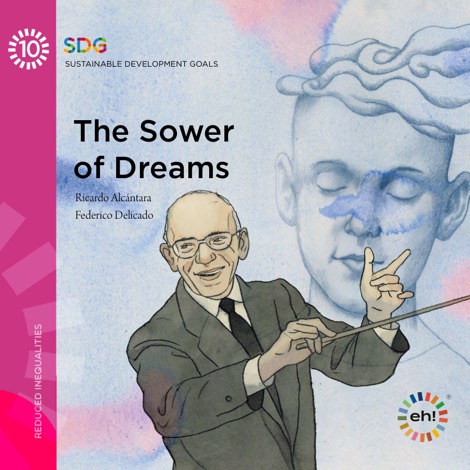
The Sower of Dreams
Book 10 of 17 in the Eco Heroes SDG Library, one illustrated story for each UN Sustainable Development Goal. Included with any Eco Heroes plan (families from €79 a year + VAT: €95.59 with 21% Spanish VAT; the VAT and the total that apply to you are shown before you pay); SDG 1 is free to try. Published in English, Spanish, French, German, Italian, Portuguese, Catalan, Danish, Dutch, Japanese, Korean and Chinese.
Bring it into the room
Talk about it, try it
One question to ask after reading
“Have you ever been left out of something for a reason that had nothing to do with what you could do? How did it feel?”
Same race, different starts
Hand out made-up character cards (“your school has a library”, “you speak a different language at home”, “you have a bike”). Everyone steps forward for each advantage their character has. Then talk: was the finish line fair?
Watch
The short mission video
April and Karim walk through this goal in a short video, with subtitles in your language.
Transcript
Everything said in the video, in order, with the words and figures shown on screen.
Version for ages 9–12
- April: Level the field. Lift each other. An Eco Heroes mission.
- On screen: An Eco Heroes mission · Goal 10 · ages 9–12
- On screen: See something real
- April: Small acts of inclusion change someone's whole day. Why do some people get a fair chance and others don't?
- On screen: A real question is where every mission starts.
- On screen: Investigate the system
- Karim: Reduced Inequalities is a system, not a headline. 1% of people captured nearly two-thirds of all new wealth created recently.
- On screen: 1% of people captured nearly two-thirds of all new wealth created recently. (Source: Oxfam, 2023)
- Karim: People in the richest countries can live ~30 years longer than in the poorest.
- On screen: ×30 People in the richest countries can live ~30 years longer than in the poorest. (Source: WHO, 2023)
- On screen: 1.3B people live with a significant disability — often facing exclusion. (Source: WHO, 2023)
- On screen: Step 4 · Meet someone who understands it
- Karim: Ask the people who know: a disability association, a newcomer to your town, a sign-language user.
- April: Your mission — The Includer. Turn 'left out' into 'brought in' — for real. Do: Notice someone often left out and include them this week.
- On screen: Prove: Note what you did and how it went.
- On screen: Reflect: Why do you think they're usually left out?
- April: Bring it to school.
- On screen: Bring it to school: Show your class what you found. One finding from each of you becomes a map of your town.
- April: Show your class what you found. Discuss it at home.
- On screen: Discuss it at home: Tell your family what you did and ask them one question about it. Information fades — questions travel.
- April: Tell your family what you did and ask them one question about it. Take action locally.
- On screen: Take action locally: Pick the one action from your mission you can do this week — and tell one person why.
- Karim: A true story — The Woman Who Wouldn't Move. You must never be fearful about what you are doing when it is right.
- On screen: Small hands. Real problem. Real change.
- Karim: Rosa Parks. 17 goals, 13 languages, one hero: your child. eco-heroes.org
- On screen: eco-heroes.org/game
Version for ages 13–17
- April: Same world.
- On screen: An Eco Heroes mission · Goal 10 · ages 13–17
- On screen: Notice something real
- April: Very different chances. The 12 richest billionaires own more than the poorest half of humanity. Is inequality the price of success — or a design choice?
- On screen: Hard questions are where real missions start.
- On screen: Map the system
- Karim: Inequality is a system: taxes, wages, inheritance and access. The richest 10 percent own 75 percent of the world's wealth, while the poorest half
- On screen: 75% of world wealth is owned by the richest 10%. (Source: World Inequality Report, 2026)
- On screen: 1 in 5 people face discrimination in daily life. (Source: UN SDG Report, 2026)
- On screen: 1.3B people live with a disability. (Source: WHO, 2026)
- On screen: Step 4 · Talk to someone who knows
- Karim: own just 2 percent. Interview someone who knows: a social worker, an economist, a disability-rights advocate.
- April: Your mission — Access Check. Test how easy your town is for everyone to use.
- On screen: Do: Check ten public places for steps, signs, prices and opening times.
- On screen: Prove: Score each one and photograph the barriers.
- On screen: Reflect: Who is left out — and who could fix it?
- April: Take it to school.
- On screen: Take it home: Ask your family when they felt treated unfairly — and why.
- On screen: Act where you live: Send your scores to the council or a local disability group.
- On screen: Real data. Real questions. Real change.
- April: Present your access scores and propose one fix for your school. Then take it home, and act where you live.
- Karim: A true story. You must never be fearful about what you are doing when it is right. Rosa Parks. 17 goals, 13 languages, your move. eco-heroes.org
Brazil's Bolsa Família: Cash transfers that changed a country
Brazil's Bolsa Família programme gave conditional cash transfers to poor families — on condition their children attended school and got health checks. It reduced extreme poverty by 28% and improved education outcomes.
Quick check
Test yourself
What does inequality mean?Show the answer
- Everyone gets the same
- Unfair differences in wealth, opportunity or rights
- Equal weather
- A maths problem
Answer: Unfair differences in wealth, opportunity or rights — Inequality means unfair differences in wealth, opportunity or rights between people — often rooted in structural systems.
The top 1% of the world's population owns more wealth than the bottom 50% combined.Show the answer
Answer: True — Wealth concentration has reached historic extremes — in 2023, the top 1% owned 43% of all global wealth.
What is the Gini coefficient?Show the answer
- A type of food
- A measure of income inequality
- An environmental index
- A health indicator
Answer: A measure of income inequality — The Gini coefficient measures income inequality — 0 means perfect equality, 1 means one person has everything.
Go further
Seventeen goals, seventeen stories
Every SDG gets its own illustrated book, its own facts and its own activities. SDG 1 is free to try: its game chapter, trivia and video. The books and the other goals unlock with a family, school or hotel plan.
See plans →